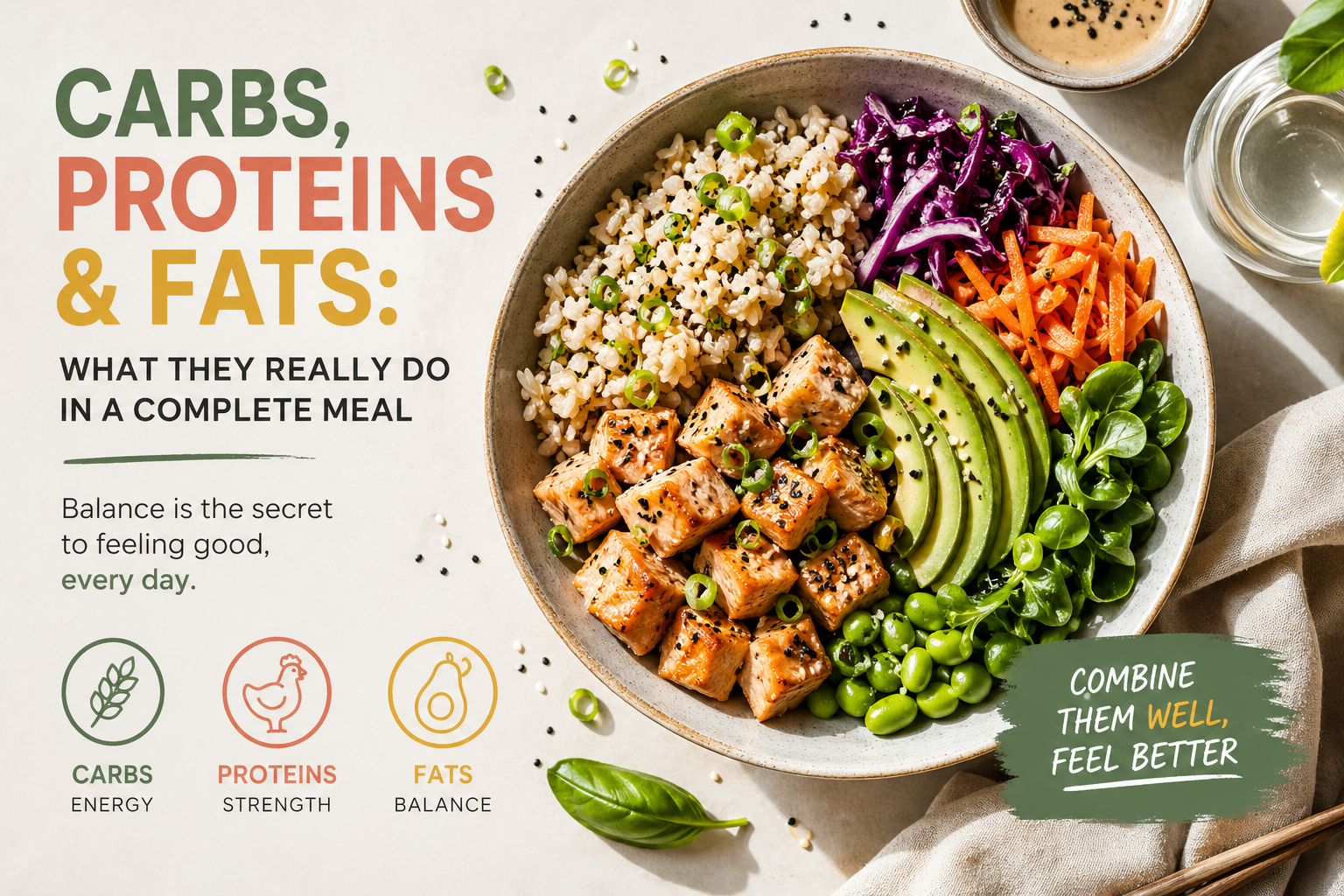
Macronutrients are not something to fear or eliminate. They work together. Understanding their role helps you build more balanced meals, even when eating out.
When it comes to nutrition, few topics are as misunderstood as carbs, proteins and fats.
Some people cut carbs to avoid weight gain, others focus only on protein, while fats are often still seen as something to limit as much as possible.
The truth is much simpler: your body needs all three.
It’s not about removing nutrients, but about combining them the right way.
What are macronutrients (and why they matter)
Macronutrients are the nutrients your body uses for energy and essential functions.
Every meal you eat is a combination of these three elements.
When they are balanced properly, something very practical happens:
you feel fuller for longer, your energy stays stable, and you avoid that typical mid-afternoon crash.
Carbs: your main source of energy
Carbohydrates are often misunderstood, but they are your body’s primary energy source.
Rice, quinoa, grains, potatoes: these foods help you stay active and focused throughout the day.
The issue is not carbs themselves, but the type and how they are consumed.
A meal based only on simple sugars gives quick energy… followed by a fast drop.
When carbs are part of a complete meal, energy becomes more steady and sustained.
Proteins: structure and satiety
Proteins play a key role in building and maintaining body tissues, but they also help you feel full.
That’s why meals low in protein often leave you hungry soon after.
Chicken, salmon, tofu, legumes: adding a protein source makes your meal more satisfying and balanced.
Fats: balance and flavor
For years, fats have been avoided, but they are essential.
They support hormone function, help absorb vitamins and make meals more enjoyable.
Olive oil, avocado, nuts: in the right amount, they complete your meal and improve overall balance.
The most common myths about macronutrients
One of the biggest mistakes is thinking that eating healthy means cutting something out.
In reality:
removing carbs often leads to low energy and more cravings
avoiding fats can make meals less satisfying
focusing only on protein is not sustainable long term
A meal works best when macronutrients work together.
Why a balanced meal really works
When carbs, proteins and fats are all present, three things happen:
your energy is released more gradually
you stay full for longer
the meal is more satisfying, both physically and mentally
This is why some lunches keep you going all day, while others leave you hungry shortly after.
Why a balanced meal really works
When carbs, proteins and fats are all present, three things happen:
your energy is released more gradually
you stay full for longer
the meal is more satisfying, both physically and mentally
This is why some lunches keep you going all day, while others leave you hungry shortly after.
Eating balanced, even when eating out (in Naples)
Eating out doesn’t mean giving up balance.
Today, it’s easier than ever to find meals that combine taste and quality ingredients.
In Naples, Bowl was created with this idea: offering a fast lunch that is also complete.
A meal that keeps you light, but energized throughout the day.
Because eating well shouldn’t be complicated.
It should fit into your everyday routine.
Final takeaway: don’t eliminate, combine better
Carbs, proteins and fats are not enemies. They are tools.
When you learn how to combine them, everything changes:
more energy, better balance, less uncontrolled hunger.
And ultimately, more enjoyment in what you eat.