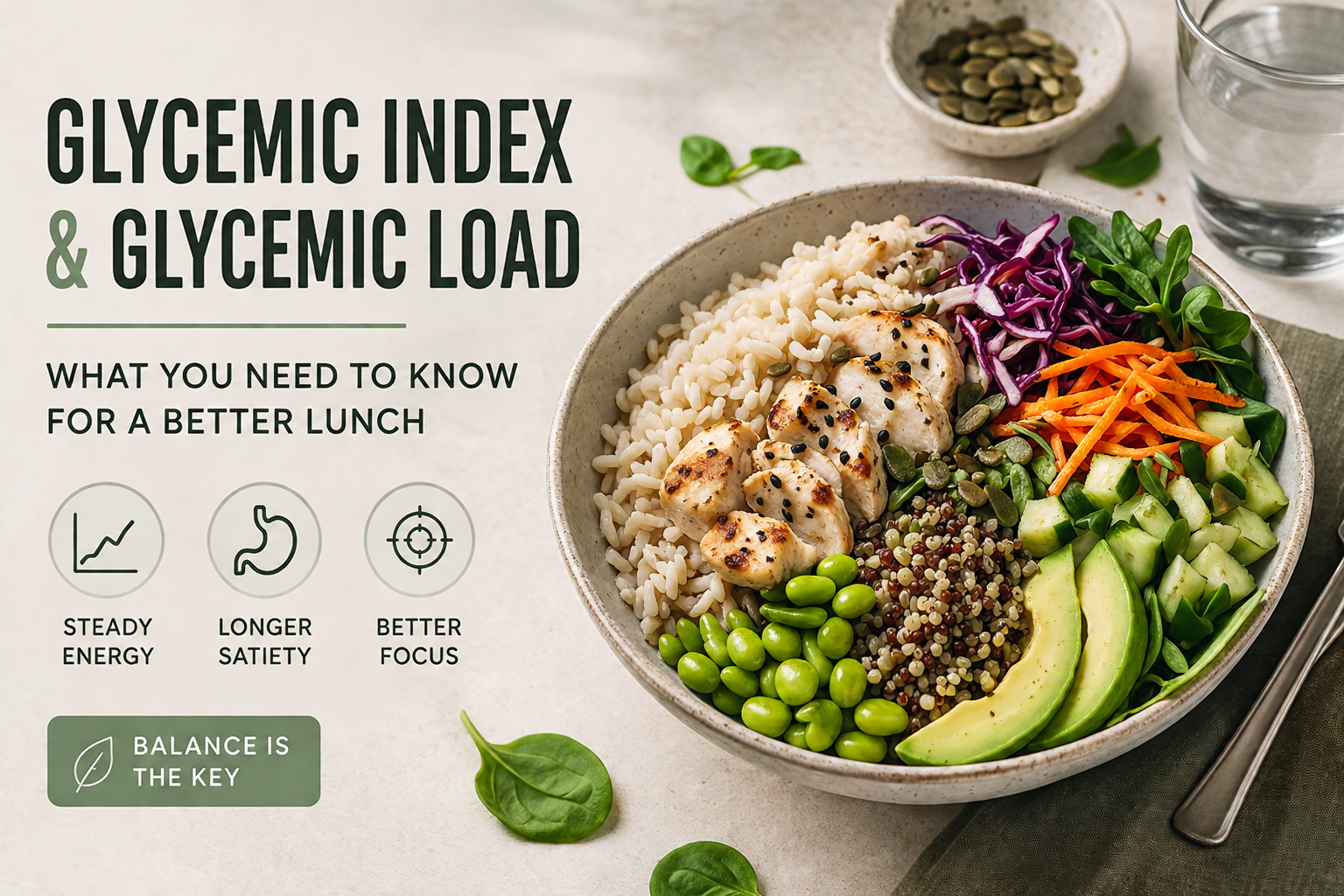
Not all carbohydrates affect your energy in the same way. Understanding the difference between glycemic index and glycemic load helps you choose a more balanced lunch that keeps you full and energized throughout the day.
Why you feel tired after lunch
Have you ever finished lunch feeling full, only to experience a drop in energy shortly after?
That mid-afternoon slump, lack of focus, or sudden hunger isn’t just about how much you ate. It’s often about how your meal affected your blood sugar levels.
Some meals cause a rapid spike in blood sugar, followed by a quick drop. That’s what leads to feeling tired, unfocused, or craving something else soon after eating.
This is where glycemic index and glycemic load come into play.
What is the glycemic index
The glycemic index refers to how quickly a food raises blood sugar levels.
Foods with a high glycemic index are digested and absorbed quickly, giving you a fast burst of energy that doesn’t last long. Lower glycemic index foods release energy more gradually, helping you stay energized for longer.
But this is only part of the picture.
Why glycemic load matters
Glycemic load takes things a step further by considering not just how fast a food acts, but also how much it impacts your blood sugar overall.
In real life, you don’t eat foods in isolation. You eat meals.
That’s why glycemic load is often more useful: it reflects the actual effect of a full plate, not just a single ingredient.
Why the whole meal makes the difference
A meal made mostly of simple carbohydrates tends to be less satisfying and more likely to cause energy swings.
On the other hand, when your plate includes protein, fiber, and healthy fats alongside carbohydrates, everything changes. The absorption of sugars slows down, and your body responds in a more stable way.
The result is something you can feel almost immediately. Your energy stays more consistent, your focus improves, and you don’t find yourself searching for snacks shortly after eating.
How to build a more balanced lunch
You don’t need to calculate numbers or memorize charts to improve your meals.
It’s more about thinking in terms of balance. When carbohydrates are combined with protein and fiber in the same dish, the overall impact on your energy becomes more stable.
This simple shift can make a big difference in how you feel throughout the day.
A bowl as a real-life example of balance
A well-built bowl is a practical example of a balanced meal.
In one dish, you typically have a base of carbohydrates, a protein source, vegetables rich in fiber, and a portion of healthy fats. This combination helps reduce the overall glycemic impact and keeps your energy more stable.
It’s not about avoiding carbs. It’s about balancing them in the right way.
And that’s often what makes the difference between a meal that slows you down and one that supports your day.
Eating better starts with understanding your body
Glycemic index and glycemic load aren’t just technical concepts. They’re practical tools that help you make better choices.
Once you start noticing how different meals make you feel, it becomes easier to move toward more balanced options.
Because in many cases, it’s not about eating less. It’s about eating smarter.